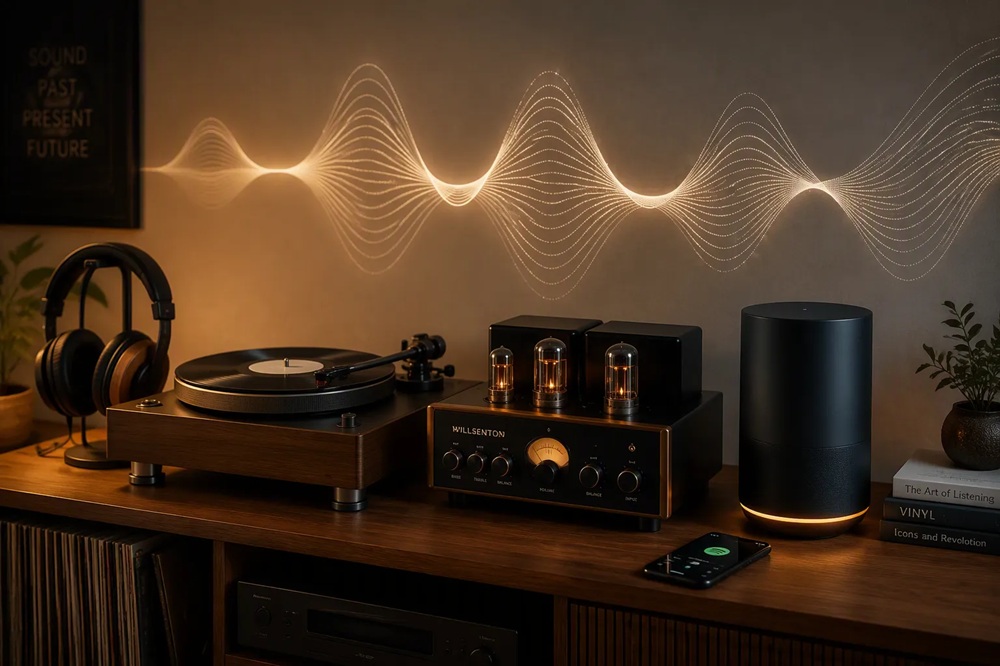
Smart wireless audio will replace wired Hi-Fi for most listeners. Wired systems will survive among purists. The future belongs to hybrid, smart-enabled high-end audio. Wireless convenience, rapid codec advances, and changing listening habits drive this shift. Wireless Digital Players now deliver high-resolution sound. Think of electric cars versus gasoline: wireless takes the mainstream, and enthusiasts keep the old-school experience alive.
Wireless audio has transformed how you experience music at home. You no longer need to run cables through walls or worry about speaker placement limitations. This convenience drives millions of listeners toward wireless solutions every year.
You can now fill your entire home with synchronized music through a single app. Modern wireless systems let you group speakers across different rooms effortlessly. You control everything from your smartphone without touching a single wire. This flexibility appeals to renters and homeowners alike. You avoid drilling holes and hiding cables behind furniture. Wireless Digital Players make this multi-room experience seamless and intuitive.
Bluetooth codecs have improved dramatically over the past decade. LDAC transmits data at rates up to 990 kbps. AptX HD delivers 24-bit audio quality over wireless connections. These advances mean you stream high-resolution files without significant compression. The audio gap between wired and wireless shrinks with every new codec generation. You now enjoy near-lossless sound from your favorite streaming services.
Voice control has become a standard feature in modern audio systems. You simply ask your smart assistant to play a specific album or playlist. Apple, Google, and Amazon ecosystems connect your speakers to your daily routines. You can set timers, check weather, and control smart home devices through the same speaker. This integration makes wireless audio a central hub for your connected home.
Wireless audio dominates the mainstream conversation. Yet wired Hi-Fi systems maintain a dedicated audience. You might wonder why some listeners refuse to cut the cord. The reasons go beyond nostalgia.
Wired connections deliver an uncompressed signal directly to your speakers. You hear every detail without digital compression artifacts. Latency remains a critical factor for serious listeners. Wired audio runs at approximately 4 milliseconds of latency. Wireless codecs introduce more delay:
These numbers matter for real-time listening. You notice timing issues during critical sessions. Wired systems eliminate this concern entirely.
You touch every part of a wired system. You swap cables, adjust tonearms, and position speakers with precision. This hands-on ritual creates a deeper connection to your music. Each component offers upgrade potential. You replace a DAC or amplifier without discarding your entire setup. Wireless speakers often lock you into a single ecosystem. Wired systems give you freedom to evolve your sound over years.
Purists prioritize signal purity above all else. You want the shortest path from source to speaker. Wired connections provide that direct route. This mindset drives continued demand for high-end analog gear. Manufacturers like Tonewinner recognize this loyalty. They design products that satisfy both wired traditionalists and modern wireless adopters. The purist community keeps wired Hi-Fi relevant and thriving.
You might wonder whether modern wireless audio can truly match the fidelity of a wired system. Recent blind tests provide a clear answer.
Controlled studies show that trained listeners struggle to distinguish wireless from wired audio. One prominent 2023 blind test from SoundOn Labs revealed these findings:
In double-blind testing with trained listeners, LDAC wireless audio was indistinguishable from wired CD-quality sources 92% of the time. The measurable difference falls below reliable perceptual thresholds for most people most of the time.
The acoustic environment in your home plays a far larger role than the connection type. Consider this:
Beyond 8kHz, it really doesn't practically matter. Our hearing acuity drops off, wavelengths become smaller (4.3cm at 8kHz), nulls becoming spatially even narrower, and effectively self-averaging with music listening.
Room deficiencies—reflective windows, hard floors, poor speaker positioning, and seats against the back wall—impact your listening experience more than any DAC upgrade. Acoustic treatment and proper speaker placement matter more than the wired versus wireless distinction.
You can now find wireless speakers that compete directly with traditional wired systems. These models incorporate advanced codecs and high-quality drivers. Products like Tonewinner's Wireless Digital Players combine high-resolution streaming with room correction technology. You get smart features without sacrificing sound quality.
Wireless Digital Players have changed the way you build a serious audio system. These devices combine streaming, decoding, and amplification into a single elegant unit. You no longer need a rack of separate components to achieve excellent sound.
You can now stream 24-bit/192kHz files directly through a Wireless Digital Player. The internal DAC handles conversion without external hardware. This design removes cable clutter and reduces potential interference. You access Tidal, Qobuz, and local libraries through one interface. The player manages everything from network connectivity to analog output. This integration simplifies your setup dramatically.
Modern powered speakers include digital signal processing built into the cabinet. You get precise crossover control and driver optimization without external equipment. Room correction software analyzes your space and adjusts the output automatically. You place speakers where they sound best and let the DSP handle acoustic problems. This technology delivers consistent performance in real rooms. Wireless Digital Players often pair with these speakers seamlessly.
Tonewinner has embraced this shift toward integrated wireless audio. The brand designs Wireless Digital Players that satisfy both convenience seekers and sound quality enthusiasts. Tonewinner products combine high-resolution streaming with robust amplification. You get smart features and premium components in one package. The company's engineering focus ensures clean signal paths and reliable performance. Tonewinner understands that modern listeners want flexibility without compromise. Their lineup represents the hybrid future of home audio.
The high-end audio market is evolving rapidly. You see manufacturers blending wireless convenience with audiophile-grade components. Industry analysts predict strong growth in premium wireless products. The future does not pit wireless against wired. Instead, it merges the best of both worlds into hybrid systems that deliver exceptional sound and modern convenience.
You no longer face a binary choice between wireless convenience and wired fidelity. Hybrid systems let you enjoy both approaches in a single setup. You stream music wirelessly from your phone. The signal then travels through high-quality wired components to your speakers. This architecture preserves signal integrity while embracing modern streaming platforms.
Consider how these hybrid configurations work in practice:
|
Hybrid Audio System |
Wireless Streaming Component |
High-Quality Wired Component |
|
Whole-house hybrid wireless audio |
Music streamers such as Google Chromecast Audio, AudioCast, Sonos Connect, and Amazon Dot |
Multiple stereo amplifiers with wired speakers placed in bookshelves, night stands, ceilings, or walls |
|
Custom in-ceiling Amazon Echo Dot installation |
Amazon Echo Dot used as a wireless music streamer |
In-ceiling speakers connected via a single Cat cable carrying power and audio signal up to 200 feet |
You gain flexibility with this approach. You control playback through voice commands or mobile apps. The wired backbone ensures clean power delivery and stable signal transmission. This design eliminates the compression artifacts that plague all-wireless setups. You hear the full dynamic range of your music collection.
The hybrid model also future-proofs your investment. You upgrade the wireless streaming module without replacing your amplifiers and speakers. You swap in a new Wireless Digital Player when technology advances. Your core audio components remain valuable for years. This modular approach appeals to listeners who want both convenience and longevity.
Artificial intelligence is transforming how you optimize your listening room. Traditional calibration required manual measurements and expert adjustments. Modern AI systems handle this complexity automatically. You achieve professional-grade sound without hiring an acoustic engineer.
The AI tuning process follows a structured approach:
This technology extends beyond software adjustments. Some systems include physical positioning mechanisms. The patent includes a physical positioning system where speakers are moved laterally and longitudinally by linear drives. A spring-loaded ball engages with grooves to lock the speaker at correct positions when the AI-determined location is reached. This allows ceiling-mounted speakers to intelligently adjust their position as you move around the room.
Looking ahead, AI-driven DSP is poised to become even more personalized and predictive. Instead of running a calibration once and hoping for the best, future processors will analyze listener position, content type, amplitude, and even individual hearing profiles continuously, adjusting the sound in real time. We're already getting a glimpse of this future with bleeding-edge tech like Dirac ART, which uses your system's speakers to actively counteract room issues, and Anthem's ARC Genesis software that learns more about a room's acoustics with every revision.
The distinction between correction approaches matters. Dirac asks, "How do we correct this system?" AudioBro asks, "What is wrong with this setup, and what should we fix first?" Those are related questions, but they are not identical. A properly set up Dirac system can be extremely powerful. But room correction is not a permission slip to place speakers badly, ignore subwoofer position, or pretend glass walls are acoustic treatment. AudioBro's room-first approach is useful precisely because it focuses on the physical setup before assuming software can clean up the entire crime scene.
AudioBro V2 pulls previously separate room-analysis tools into one conversational interface. You can describe what sounds wrong, upload room photographs, REW measurements, speaker layouts, and AVR calibration screenshots. The system determines which analyses are relevant before recommending one practical, high-impact next move. V2 also adds persistent Room Memory, while Pro users can speak with the platform and receive its guidance by voice.
In other words, Dirac asks, "How do we correct this system?" AudioBro asks, "What is wrong with this setup, and what should we fix first?"
This AI-driven approach represents the new audiophile frontier. You no longer need decades of experience to achieve reference-quality sound. The technology learns from experts and applies that knowledge to your specific room. You get consistent, optimized performance every time you listen.
Industry analysts project significant growth in the premium audio segment. Futuresource Consulting forecasts a recovery from 2026, with strong growth in premium wireless speakers and soundbars driven by new wireless protocols and voice interfaces. Manufacturers in premium and luxury audio segments report strong sales and growth projections.
Luxury audio is redefining premium to include wireless capability and ecosystem-friendly products, moving beyond spec sheets to lifestyle integration and discreet form factors.
This market shift reflects changing consumer priorities. You want products that integrate seamlessly into your home environment. You value convenience alongside sound quality. Active speaker systems address these demands directly.
Active systems incorporate amplification, DSP, and streaming technology into the speaker cabinet. You connect a single power cable and start listening. The internal DSP handles crossover management, driver protection, and room correction. You achieve optimal performance without external equipment racks.
The shift toward active systems offers several advantages:
Passive systems still appeal to listeners who enjoy component swapping and system building. You select each amplifier, DAC, and speaker to create a personalized sound signature. This hands-on approach delivers satisfaction for many enthusiasts. The market accommodates both preferences.
Tonewinner recognizes this dual demand. The company designs products that serve traditional audiophiles and modern streamers alike. Their Wireless Digital Players bridge these worlds by combining high-resolution streaming with premium amplification. You get the convenience of wireless control and the performance of quality engineering.
The future trend points toward continued growth in active, wireless-capable systems. New protocols will enable higher resolution streaming. Voice interfaces will become more sophisticated. AI tuning will deliver increasingly personalized sound. You will enjoy better audio quality with less complexity. The high-end market will expand to serve listeners who value both convenience and fidelity.
Smart wireless audio will replace wired Hi-Fi for most listeners. Wired setups endure for purists who prize absolute signal purity. The future trends toward hybrid designs that pair wireless convenience with high-end components and smart features.
Smart wireless audio will not kill Hi-Fi. It will redefine it. Brands like Tonewinner help shape that evolution.
No. Modern codecs like LDAC deliver near-lossless sound. Blind tests confirm you cannot reliably tell the difference from wired connections.
Not necessarily. Hybrid systems let you keep your wired components. You add wireless streaming without sacrificing sound quality or upgrade flexibility.
Tonewinner's Wireless Digital Players combine high-resolution streaming, robust amplification, and room correction. You get smart features without compromising fidelity.
Tel : +86 020 3479 6146
Tel : +86 020 3479 7660
WhatsApp : +86 15812388120
Email : simi@tonewinner.com
Cím : Building 2, No.1, Hongsheng 3 Road Dashi Street, Panyu District Guangzhou, 511430 China
© 2026 Guangzhou Tonewinner Electronics Co., Ltd
Webhelytérkép | XML | Adatvédelmi irányelvek |